Responsible travel
Manipur can absorb visitors. It cannot absorb carelessness.

If you read nothing else
Ask before you photograph
People, homes, rituals and children. Every time.
Carry your plastic out
Bottles, wrappers, wet wipes. There is no collection on the ridge.
Buy from the maker
The weaver's own price, paid in full, beats any showroom discount.
Keep your distance
Inside Keibul Lamjao, stay on the marked routes and use a lens, not your feet.
Pay the guide properly
A day's guiding is a day's work. Do not bargain it down to a tip.
Check before you go
Permits, road status and advisories change. Verify with official sources.
01 · The lake
Loktak is a living system, not a viewpoint.
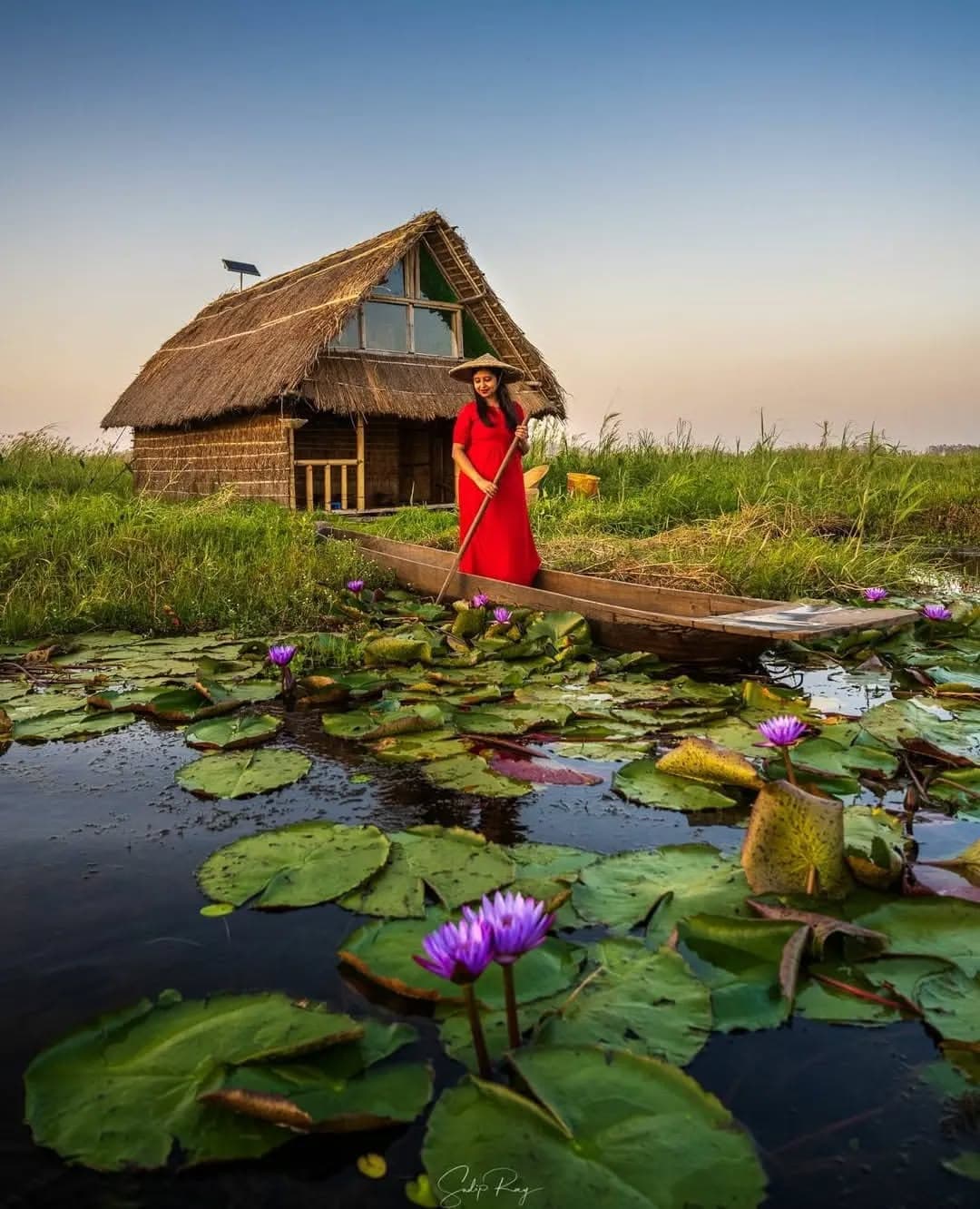
The rings you see from the air are phumdis: floating mats of vegetation, soil and decomposing organic matter that drift across the surface and root into the lakebed when the water drops. They are the reason Loktak looks the way it does, and they are not scenery. They are habitat, they are grazing, and for generations of fishing families they were the material out of which a working life was built.
Loktak is a Ramsar site (a wetland of international importance), and it has spent much of the last three decades on the Montreux Record, the register kept for Ramsar sites where the ecological character has changed or is likely to change. That listing is the formal way of saying what fishing communities have said for years: the lake is not well.
What is pressing on it
Water levels are held artificially high by a barrage built for hydropower at the lake's outflow, which suppresses the seasonal drying that phumdis need in order to root, draw nutrients from the lakebed and stay thick. Thinner phumdis support less life. Add nutrient runoff from the catchment, sediment washed down from deforested slopes, invasive aquatic weeds and plastic arriving with visitors, and you have a system being squeezed from several directions at once.
None of that is a visitor's fault. But the last item on the list is entirely within a visitor's control.
On the water
- Take nothing disposable onto a boat that you are not prepared to bring back off it. A bottle dropped over the side does not sink out of the story; it lodges in a phumdi.
- Hire local boatmen rather than the cheapest operator you can find online, and agree the route and the price before you push off.
- Treat the circular fishing enclosures as someone's workplace, because that is what they are. Do not have your boat cut through them for a photograph.
- Homes on the lake are homes. A long lens and a question are both better than drifting up to a doorway.
02 · The deer
The sangai lives in one place on earth.
The sangai is the Manipur brow-antlered deer, and it is endemic: the wild population exists in Keibul Lamjao, on the southern reach of Loktak, and nowhere else in the world. The park is usually described as the only floating national park there is, because the deer live and feed on the phumdis themselves, walking on a surface that gives underfoot, which is where the animal's local reputation for a delicate, dancing gait comes from.
It was declared extinct in the mid-twentieth century and then found again, in very small numbers, in this one wetland. The species remains listed as endangered on the IUCN Red List and its wild range is among the most restricted of any large mammal. Every pressure on the phumdis is, directly, a pressure on the sangai: thinner floating mats mean less of the only habitat it has.
Visiting Keibul Lamjao
- Go early. The deer are most active around dawn and late afternoon, and the light is better for photographs that do not require you to get closer.
- Stay on the marked paths, the watchtowers and the designated routes. Walking out onto phumdi damages it and is dangerous for you.
- No drones, no calls, no playback, no baiting an animal into a frame. If it has moved because of you, you are too close.
- Keep groups small and voices low, and take the forest staff's instructions as instructions rather than suggestions.
03 · People
A village is not an exhibit.
Arriving well
Manipur is home to many communities (Meitei, Naga, Kuki-Zo, Pangal and others), with distinct languages, faiths, histories and customs, and a recent past that includes real conflict and displacement. Travel here with the assumption that you do not know the local context, because you almost certainly do not.
- Where a village has a headman, a council or a host family coordinating visits, go through them. Arriving unannounced puts your hosts in an awkward position.
- Dress modestly, especially around temples, churches and sacred groves, and follow whatever footwear rule the household uses.
- Ask before entering a compound, a kitchen or a place of worship, and before touching looms, instruments or ritual objects.
- Do not photograph or discuss conflict-affected sites, displaced families or security installations for content. Let people decide what of their own story they want to tell you.
- Learn a few words. Khurumjari, a Meiteilon greeting, goes further than you would think.
Photography, specifically
Consent is the whole rule, and it is not implied by someone being visible. Ask, show the photograph if you can, and accept a refusal without negotiating. Children need a parent's consent, not their own enthusiasm.
Rituals, funerals and religious performances are frequently off limits to cameras even when a crowd is present. If there is no one to ask, the answer is no. And if you intend to publish or sell an image of an identifiable person, say so at the time you ask, not afterwards.
Paying properly
Guiding, driving and hosting are skilled work, and the rates are already modest by most visitors' standards. Agree a price up front, in writing if you can, and then pay it. Bargaining a guide down by a few hundred rupees is not a win; it is a transfer from the person with the least margin to the person with the most.
Prefer arrangements where the money reaches the household directly: a homestay over a chain hotel, a village-run guide over an out-of-state agency, a meal cooked at your stay over a franchise.
04 · The weave
Buy the cloth from the person who wove it.
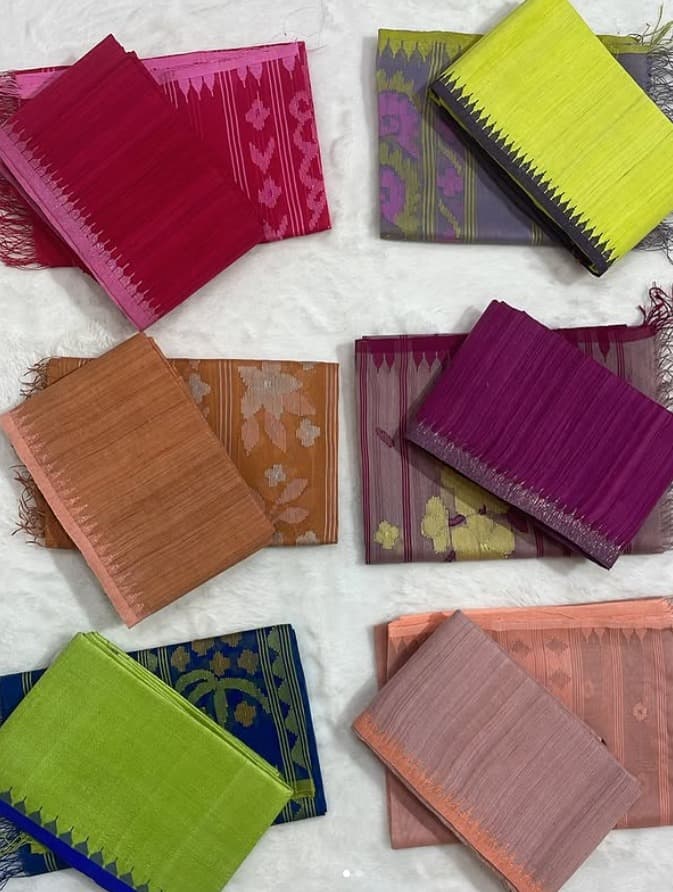
Manipur has one of the largest handloom-weaving workforces of any Indian state, and the overwhelming majority of those weavers are women working at home, often on a loin loom or a small frame loom in the front room. A phanek, an innaphi or a shawl can represent days of work, and the difference between buying it at the loom and buying it three intermediaries later is the difference between a fair day's wage and a fraction of one.
- Buy at the market stall, the weavers' cooperative or the household itself. Ima Keithel in Imphal is run entirely by women traders and is a good place to start.
- Ask what the motif means and who wove it. Some designs belong to particular communities and are not decorative patterns to be worn casually; a seller will usually tell you if you ask.
- Pay the asking price for handwoven work. Haggling is normal for many goods; driving down the price of something that took four days on a loom is not.
- Machine-made lookalikes exist and are cheaper. If the price seems impossible for the labour involved, it probably is.
05 · Plastic and trails
Whatever you carry up, carry down.
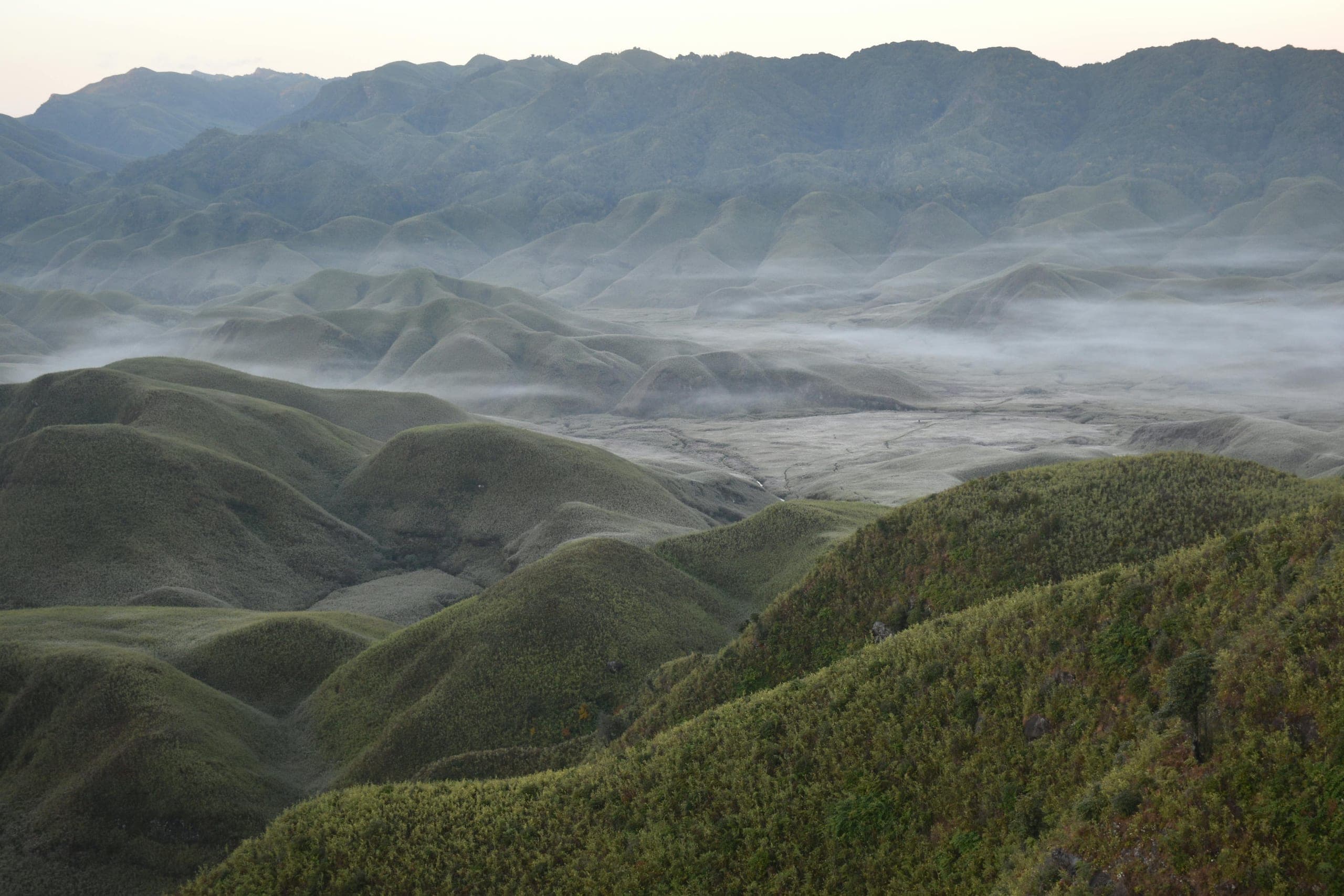
There is no waste collection on a ridge in Ukhrul, at a waterfall in Tamenglong or on a phumdi in Bishnupur. Anything left behind stays there, gets burned, or ends up in the water. Trek routes near the popular viewpoints already show it.
- Carry a refillable bottle and a filter or purification tablets instead of buying cases of single-use water.
- Bring a dry bag for your own rubbish, including fruit peel and wet wipes, and take it back to a town with collection.
- Stay on the established path. Cutting a switchback starts an erosion channel that the next monsoon widens.
- No open fires outside designated spots, and no washing with soap or detergent in a stream. It is someone's drinking water downhill.
- If there is a village waste rule, follow it. If there is a local clean-up, join it.
If it was not growing there when you arrived, it should not be there when you leave.
06 · Before you book anything
Check the current rules yourself.
This is the part of the page we are least able to keep accurate, so we would rather send you somewhere authoritative than guess on your behalf.
Entry requirements for Manipur have changed more than once in recent years. Indian citizens from outside the state are generally required to hold an Inner Line Permit, and foreign nationals have at various points been subject to Protected Area Permit rules, with relaxations granted and withdrawn. Which regime applies to you, how long a permit lasts and where you apply are all liable to change without much notice.
Security and road conditions also vary by district and by period. Some areas have been affected by conflict and displacement, curfews and internet restrictions have been imposed at times, and a route that was routine last season may not be this one.
- Check the Government of Manipur and Manipur Tourism for permits and current notifications.
- Check your own government's travel advisory, and (if you are not an Indian citizen) the Ministry of Home Affairs rules that apply to your nationality.
- Ask your host or guide about local conditions in the week before you travel. They will know things no advisory captures.
- Take out travel insurance that actually covers the region and the activities.
The visitor's pledge
0 of 6 agreed
Nothing here is enforced and nothing is recorded. Read each line, and tick it only if you mean it.
Take your time. The list is short on purpose.